Brickouts: A Graffiti-Styled Display Font for Creative Projects
Brickouts is a distinctive display font that blends the edgy aesthetics of graffiti with modern typography. Designed for visual impact, this font offers a unique style that can elevate a wide range of design projects. Its PUA encoding ensures that users have easy access to all glyphs and swashes, making it a versatile choice for designers looking for creative flexibility.
Understanding Brickouts
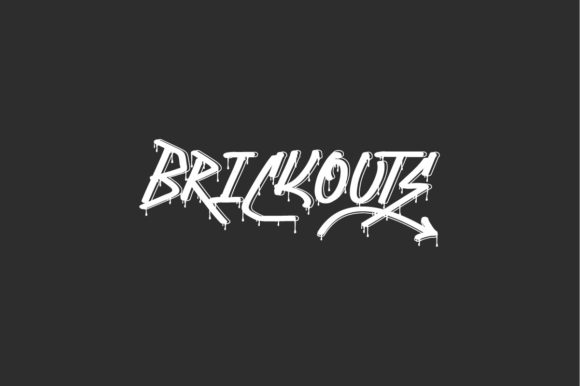
Brickouts is a graffiti-styled display font that stands out due to its bold and unconventional design elements. The font features irregular shapes, sharp angles, and dynamic strokes that mimic the look of street art. This makes it ideal for projects that require a strong visual presence, such as logos, posters, and branding materials. Unlike traditional fonts, Brickouts does not follow standard typographic conventions, which gives it a raw and unpolished feel that appeals to certain audiences.
The PUA (Private Use Area) encoding of Brickouts allows users to access all of its glyphs and swashes without relying on complex keyboard layouts or special character inputs. This makes it easier for designers to incorporate the font into their work, even if they are not familiar with advanced typographic tools.
Why Someone Might Be Interested in Brickouts
Designers and artists who want to create a striking visual identity may find Brickouts appealing. Its graffiti-inspired style can add a sense of energy and rebellion to a project, making it suitable for brands targeting younger or alternative audiences. Additionally, the font's unique appearance can help differentiate a design from more conventional typefaces, giving it a memorable edge.
For those working on projects that require a non-traditional aesthetic, such as music album covers, event flyers, or social media graphics, Brickouts can serve as a powerful tool. Its ability to convey a sense of movement and spontaneity makes it a good fit for creative industries where visual impact is key.
Benefits of Using Brickouts
One of the main benefits of using Brickouts is its visual distinctiveness. The font’s graffiti-style design sets it apart from other display fonts, making it an excellent choice for projects that need to stand out. Its PUA encoding also simplifies access to its full glyph set, allowing users to experiment with different characters and stylistic variations without technical barriers.
Another advantage is its adaptability. While it has a strong personality, Brickouts can be used in various contexts depending on how it is applied. It works well in large text sizes where its details can be appreciated, but it may not be suitable for body text due to its complexity and lack of readability at smaller sizes.
Tradeoffs and Considerations
Despite its strengths, Brickouts may not be the best choice for every project. Its stylized design can be overwhelming in certain contexts, especially when paired with other complex elements. Designers should consider the overall composition and ensure that the font complements rather than competes with other visual components.
Readability is another important factor. While Brickouts is effective as a display font, it may not be ideal for long-form text. Users should test the font in different sizes and settings to determine its suitability for their specific needs.
Additionally, the font’s graffiti style may not align with all brand identities. Companies that prioritize professionalism or simplicity may find that Brickouts feels too informal or chaotic for their purposes. In such cases, alternatives with a more refined appearance might be more appropriate.
Situations Where Brickouts Is a Strong Fit
Brickouts is particularly well-suited for projects that aim to evoke a sense of urban culture, youthfulness, or artistic expression. It can be an excellent choice for branding in the music, fashion, or entertainment industries, where a bold and unconventional image is desired. For example, a music festival poster or a streetwear label might benefit from the font’s energetic and rebellious vibe.
It also works well in digital media, such as social media posts, website headers, or mobile app interfaces, where visual impact is crucial. When used sparingly and in conjunction with simpler fonts, Brickouts can add a unique touch without overwhelming the viewer.
Situations Where Alternatives May Be Worth Considering
In more formal or traditional settings, alternatives to Brickouts may be more appropriate. For instance, a corporate website or a professional publication may require a font that is clean, legible, and consistent with established design standards. In these cases, sans-serif or serif fonts might provide a better balance between style and functionality.
Users who need a font with broader compatibility across different platforms and software may also want to explore alternatives. While Brickouts is PUA-encoded, some applications may not support this format as seamlessly as standard Unicode fonts. Designers should verify that the font will work correctly in their intended environment before committing to its use.
Practical Decision-Making Insights
When deciding whether to use Brickouts, designers should evaluate their project’s goals and audience. If the objective is to create a visually striking and unconventional design, then Brickouts can be a valuable asset. However, if clarity and broad appeal are priorities, it may be necessary to choose a more neutral font.
Testing the font in different contexts is essential. Designers should experiment with varying sizes, colors, and surrounding elements to see how Brickouts performs in real-world scenarios. This process can help identify potential issues and ensure that the font meets the project’s requirements.
Finally, considering the target audience is crucial. A font that resonates with one group may not be well-received by another. Understanding the preferences and expectations of the intended viewers can guide the decision-making process and lead to more effective design choices.